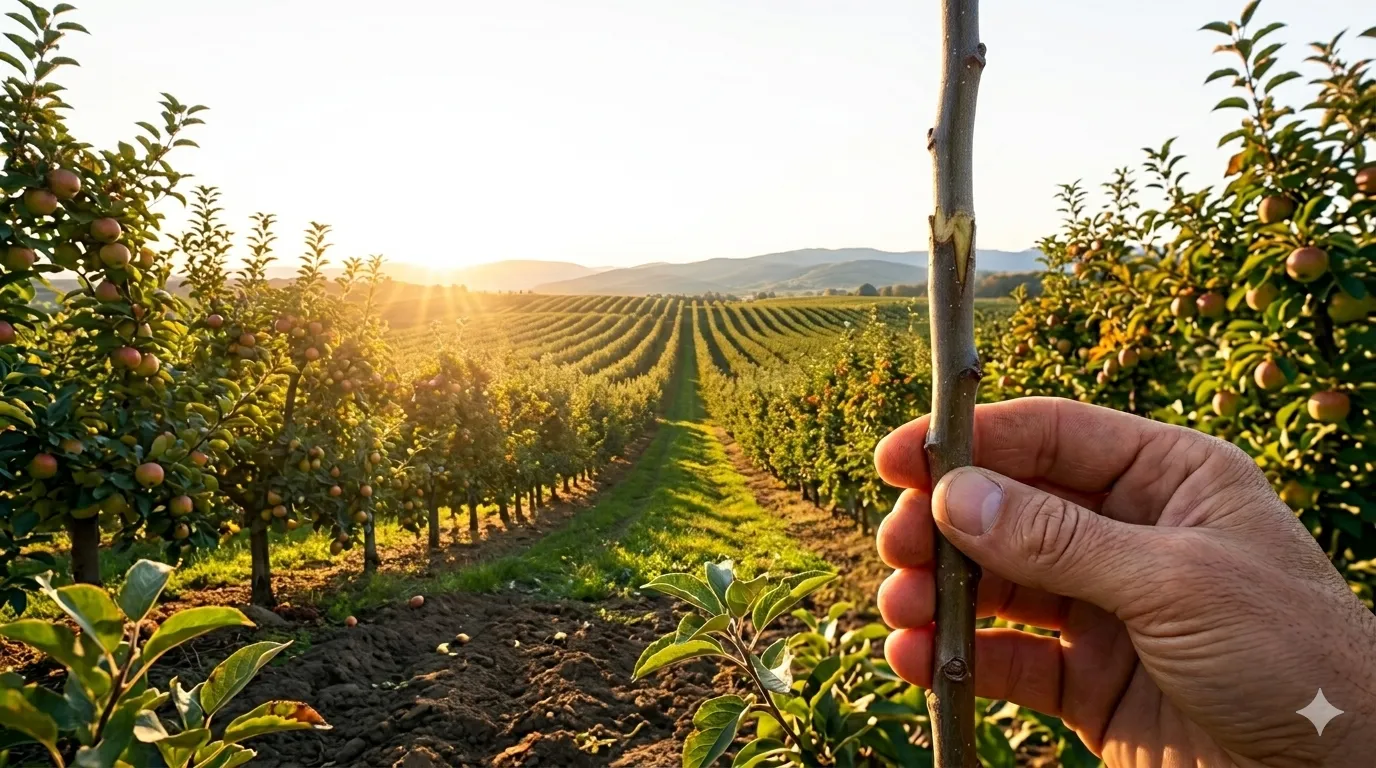
Spring is the most critical period in the orchard calendar. The decisions made in February and March will determine fruit quality, disease pressure, and yield for the entire growing season.
Spring is the most critical period in the orchard calendar. The decisions made in February and March will shape fruit quality, disease pressure, and total yield for the entire growing season. At Kalem Voće Miladinović, we work year-round — but spring is when everything matters most.
Winter Pruning: The Foundation
Pruning should be completed before bud break, ideally when temperatures are consistently above freezing but before green tissue appears. The objectives are straightforward: remove dead, diseased, and crossing wood; establish or maintain the target tree form; and open the canopy to allow light penetration to the fruiting zone.
For high-density apple systems on dwarfing rootstocks, the central leader form with horizontal or slightly drooping laterals is the standard. Laterals older than three years are progressively renewed to maintain fruitfulness. For cherry on Gisela, a modified open vase or KGB (Kym Green Bush) system is increasingly preferred, enabling mechanical harvest and reducing labor costs.
Dormant Oil Sprays
Before bud break — typically when temperatures reach 8–10°C — a well-timed dormant oil application can significantly reduce overwintering populations of scale insects, mites, and certain aphid species. This single application is one of the highest-return interventions in the spring program and is compatible with both conventional and integrated pest management approaches.
Frost Protection Planning
Late frost events remain the primary climate risk for most fruit species in the Balkans and Central Europe. Apple and pear begin to lose significant flower viability at -2.2°C; sweet cherry is sensitive from -1.1°C at full bloom. Investing in frost monitoring equipment and having an irrigation or wind machine strategy in place before bloom is essential for any commercial planting.
Fertilization Timing
Nitrogen applications should be timed to just before bud break and divided into two or three doses through the growing season. Early nitrogen supports shoot development and flower development; late nitrogen risks delaying harvest maturity and reducing fruit color. Soil analysis should guide potassium and phosphorus decisions on a three-to-five year cycle.
Proper spring management is the foundation of a successful harvest. If you are establishing a new orchard or need advice on your existing planting, our team is available for on-site consultation throughout the growing season.